


Navigating the Hidden Risks of Caffeine and Sugar Substitutes
In our modern world, caffeine and sugar substitutes have become nearly unavoidable “drugs of choice” for many seeking energy or a slimmer waistline. However, while these substances are common in everything from soft drinks to over-the-counter medications, they may have profound effects on your nutritional balancing and long-term health.
Rethinking Your Daily Caffeine Habit
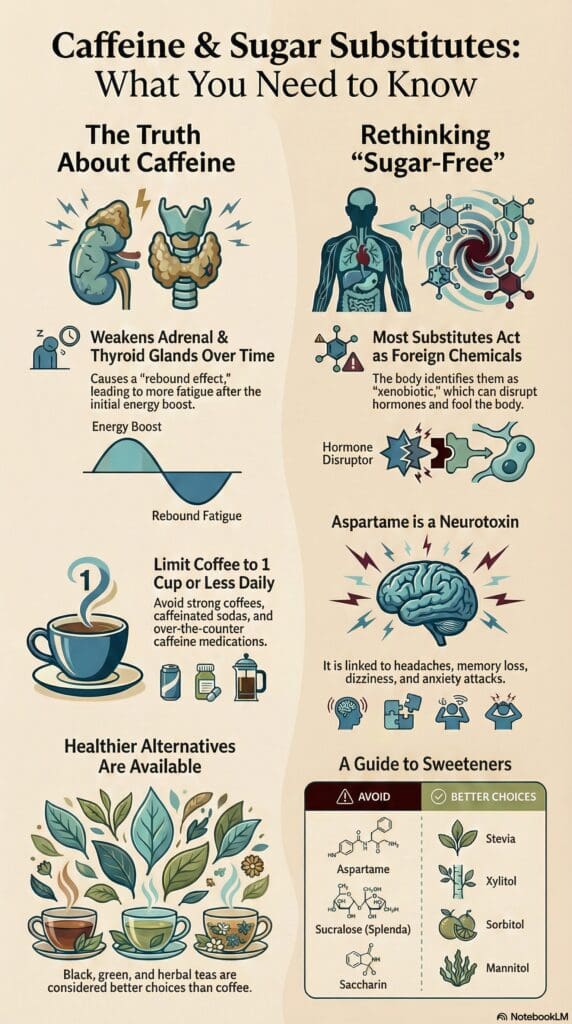
Caffeine acts as a central nervous system stimulant that triggers the adrenal and thyroid glands, providing a temporary burst of energy. Unfortunately, this stimulation comes with a “rebound effect,” leaving you feeling more tired several hours later as those glands are depleted. Over time, frequent use can lead to weakened glands, resulting in conditions like hypothyroidism or hypo-adrenalism.
If you must consume caffeine, the sources recommend limiting intake to one cup of regular coffee daily or less. For those looking for a healthier alternative, black and green teas are excellent substitutes because they contain beneficial substances alongside lower levels of caffeine, while herbal teas are considered even better.
Short-term and long-term risks of excessive caffeine include:
• Short-term: Irritability, insomnia, irregular heartbeat, and low blood sugar.
• Long-term: Increased risk of diabetes, hardening of the arteries, kidney stones, and short-term memory loss.
The Truth About Sugar Substitutes
While moving away from white sugar is a positive dietary change, replacing it with the wrong chemicals can be just as harmful. Many popular artificial sweeteners are considered xenobiotics—substances foreign to the body that can disrupt hormonal balance.
The Dangers of Aspartame and Splenda
• Aspartame (Equal/Nutrasweet): This substance is described as a neurotoxin and excitotoxin that can break down into wood alcohol and formaldehyde in the body. Symptoms of toxicity range from headaches and dizziness to more severe reactions like anxiety attacks, memory loss, and heart palpitations.
• Splenda (Sucralose): Often marketed as a safer alternative, Splenda is made using trityl chloride and is considered toxic to the body. Reported side effects include stomach cramps, diarrhea, and irritable bowel syndrome.
Healthier Alternatives
If you require a sweetener, the sources suggest choosing options that are less toxic or even beneficial to your health:
• Stevia: A naturally sweet herb that assists digestion, is nutritious, and can help suppress the appetite.
• Sugar Alcohols: Xylitol, sorbitol, and mannitol are sugars not absorbed by the body and are relatively non-toxic in small amounts.
A Note on Fructose: Be cautious of fruit juice sweeteners and high fructose corn syrup. Because they are very high in fructose, they are considered little better than regular sugar and act as xenobiotics in the body.
Protecting Your Body Chemistry
The ultimate goal of a nutritional balancing program is to strengthen body chemistry and remove toxic substances. Our livers are already working overtime to filter out chemicals from hundreds of prepared foods—including non-dairy creamers and ketchup. By reducing your reliance on caffeine and choosing natural sweeteners like stevia, you can support your body’s natural detoxification processes and improve your overall well-being.
Leave a Reply


No Code? No Problem: Dive deep into customization without ever touching a line of code. If we can do it, so can you.
Stylish & Smart: These aren't just any templates. They're masterpieces of design, crafted to turn heads and spark conversion.
Freedom to Create: Update and tweak your site on the fly with Showit's intuitive platform. It's creativity without constraints.
Support That Shines: Beachy Keen's team is like your trusty lifeguard, always ready to dive in and help you navigate the waters of web design.
The Beachy Keen Difference:
Curious who built our site? We don’t blame you, we love it, too!
Believe it or not, we did it ourselves...with a whole lot of help from Beachy Keen Creative.
We used one of their fully-stacked, beautifully designed, and strategically crafted templates to make our website dreams come true!
The best part? No tech savvy know-how required.
Love at First Site? It's that Beachy Keen Magic!
Site Credit